Students from Embry-Riddle Aeronautical University received training on the brand new CS3.1 as part of the INFUSSE Field Campaign
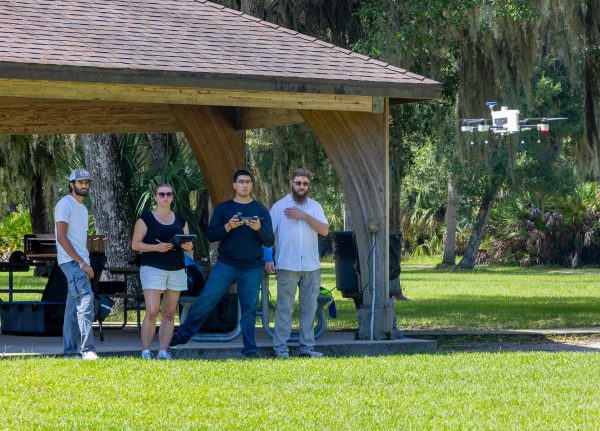
Alana Dachtler trains ERAU students to fly the CS3.1 (Florida Real Estate Media / Stephen Glen-Walker)
Predicting Sea Breezes With Drones: Embry‑Riddle, Collaborators Map Coastal Weather Phenomenon
For four days, drones crisscrossed land and ocean north of Embry‑Riddle Aeronautical University’s Daytona Beach Campus, collecting data on sea breezes.
Sea breezes are a weather phenomenon familiar to Floridians. They occur when land warms up faster than the ocean’s surface. As the hot air over the land rises, cooler ocean air rushes onshore.
During the summer, sea breezes refresh beachgoers. But sea-breeze fronts also force hot, wet air to rise, providing the lift needed to initiate powerful thunderstorms. It’s partly why Florida is a hotbed of lightning.
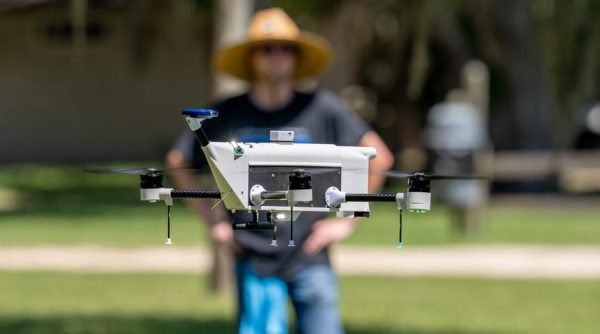
As part of the International Society for Atmospheric Research using Remotely piloted Aircraft (ISARRA) conference held at Embry-Riddle Aeronautical University in Daytona Beach, participants use drones and ground sensors to investigate variability in the lower atmosphere associated with land–sea and land–river breeze circulations, as well as assessing how these processes influence the timing, location, and evolution of convective initiation along the coast at Princess Place Preserve in Palm Coast, Fla. on Aug. 31, 2026. (Embry-Riddle / Steven Sobel)
The INFUSSE (ISARRA Northern Florida UAS: Sampling of the Shoreline Environment) Flight Week Campaign was a collaborative effort among multiple universities and drone manufacturers to investigate the evolution of the sea breeze and how it impacts daily weather in Florida.
Originally posted on September 14, 2026 by Embry-Riddle Aeronautical University | Seth Robbins
Access the full article here.